The Blueprint for Success: Audience, Objectives, and Budgeting
Many travel agents dream of filling their calendars with exciting bookings. But finding those perfect clients can feel like a mystery.
We understand this challenge. That’s why we believe Facebook Ads are a game-changer for travel agencies today. Imagine reaching billions of potential travelers. Facebook puts your offers right in front of them. It’s not just about sharing beautiful photos. It’s about connecting with the right people at the right time.
This guide will show you how. We will cover everything from finding your ideal customer to making ads that get results. You will learn about smart budgets, advanced ways to target travelers, and how to track your success. By the end, you’ll have a clear plan to turn clicks into loyal clients and achieve Predictable digital growth for your business.
With over 2 billion monthly active users, Facebook offers an unparalleled opportunity for travel agencies to connect with potential clients. The platform’s robust targeting capabilities and diverse ad formats allow for highly effective and cost-efficient marketing campaigns. For instance, companies like Trentino Marketing saw a remarkable 4.2X year-on-year increase in holiday offers viewed by leveraging Facebook advertising, reaching 13 million people across Europe and the US. This demonstrates the immense potential for driving bookings and increasing your return on investment.
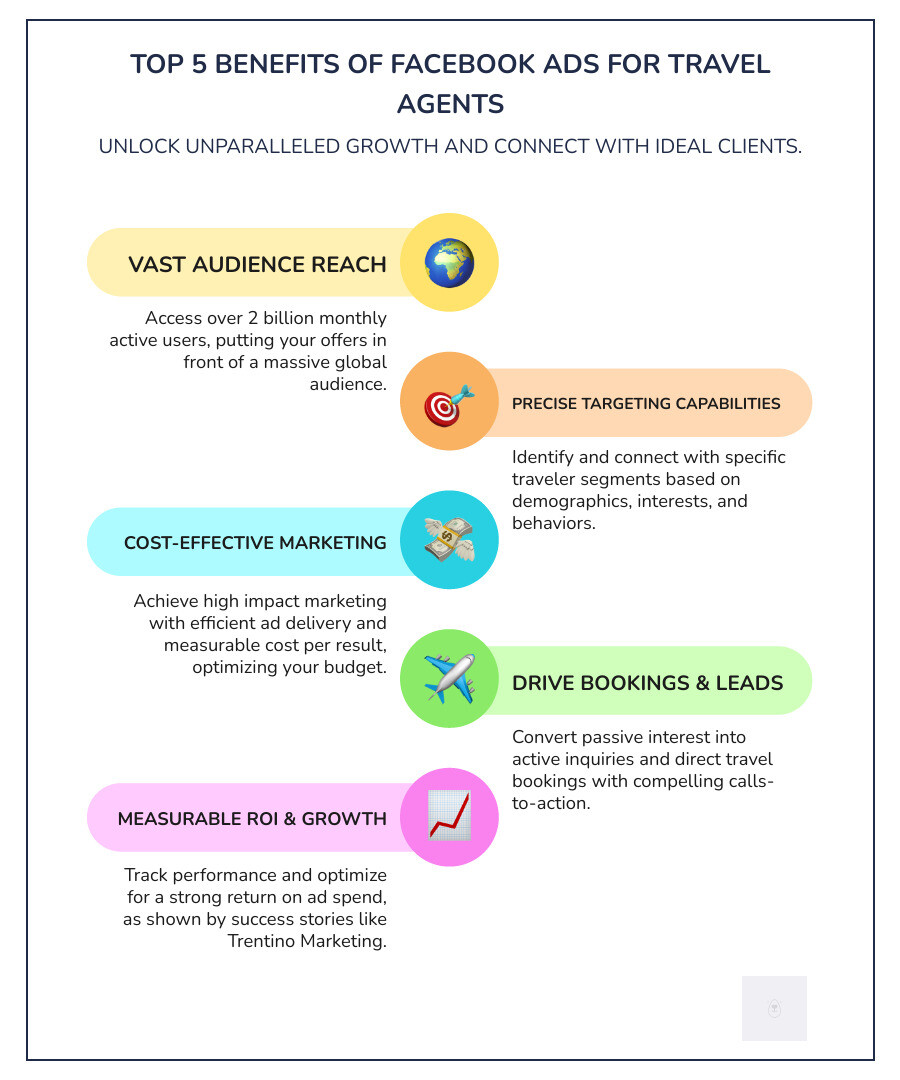
Before launching any ad, careful planning ensures every dollar is invested wisely. This foundational stage involves understanding who you want to reach, what you want them to do, and how much you’re prepared to spend.
Defining Your Ideal Traveler: From Demographics to Dreams
To effectively target your audience on Facebook, we must first understand them deeply. This goes beyond basic demographics. We encourage creating detailed buyer personas – fictional representations of your ideal clients. Consider their:
- Demographics: Age, location, income level, relationship status. Are they young adventurers, affluent retirees, or families with small children?
- Interests: What travel-related pages do they follow? Do they like “cruises,” “skiing,” “eco-tourism,” or “luxury resorts”? Facebook’s interest-based targeting is incredibly granular.
- Behaviors: Are they “frequent international travelers,” “business travelers,” or have they recently engaged with travel content? Facebook tracks these behaviors, offering powerful targeting layers.
- Life Events: Are they “newlyweds” looking for a honeymoon, celebrating an “anniversary,” or planning a “family vacation” after a new baby? These moments often trigger travel decisions.
By segmenting your audience into specific travel niches (e.g., luxury, adventure, family), you can tailor your messaging and offers to resonate directly with their unique desires and pain points. For example, an agency specializing in adventure travel might target young adults interested in hiking and extreme sports, while a luxury travel advisor would focus on high-net-worth individuals interested in exclusive experiences.
Setting Clear and Measurable Campaign Objectives
Every Facebook ad campaign needs a clear purpose. Without a defined objective, measuring success becomes impossible. Facebook offers various objectives, and we recommend aligning these directly with your business goals:
- Awareness: For introducing your agency or a new destination to a broad audience.
- Traffic: To drive visitors to your website, perhaps to read a blog post about a destination or browse packages.
- Engagement: To increase likes, comments, shares on your posts, building community and social proof.
- Leads: To capture contact information for potential clients interested in a consultation or a custom quote.
- Sales (Conversions): For direct bookings or purchases on your website.
For a travel agency, common objectives might include driving website traffic to explore new packages, generating leads for personalized itinerary consultations, or directly securing bookings for specific tours. By setting specific, measurable, achievable, relevant, and time-bound (SMART) objectives, we can track progress and adjust strategies as needed.
Smart Budgeting Strategies for Travel Agencies
Budgeting for Facebook ads doesn’t have to be daunting. We advise starting with a clear strategy and a willingness to optimize.
- Starting Budget: Many tour operators begin with a Facebook ad budget of $750 to $2,000 per month. This allows for sufficient testing and data collection. It’s crucial to remember that this is ad spend, not including management fees.
- Daily vs. Lifetime Budgets: Daily budgets are great for ongoing campaigns, allowing flexibility. Lifetime budgets are suitable for campaigns with a fixed end date, like promoting a seasonal offer.
- Cost Per Result (CPR): Monitor this metric closely. Whether it’s cost per click, cost per lead, or cost per booking, understanding your CPR helps evaluate efficiency.
- Return on Ad Spend (ROAS): This is paramount. If you spend $100 and generate $500 in bookings, your ROAS is 5x. Meliá Hotels International achieved a 2.8X higher return on ad spend by using dynamic ads for travel, demonstrating the potential for strong returns.
- Campaign Budget Optimization (CBO): Facebook’s CBO feature automatically distributes your budget across your ad sets to get the best overall results. This is particularly useful when running multiple ad sets targeting different segments within a single campaign.
- Allocating Budget: Consider allocating a portion of your budget to “cold” audiences (new prospects) and another to “warm” audiences (retargeting those who have already shown interest). This ensures a balanced approach to both new client acquisition and conversion.
By carefully planning your audience, objectives, and budget, you lay a solid foundation for successful Facebook ad campaigns.
Crafting Ads That Convert: Creatives, Copy, and Formats
An effective ad isn’t just seen; it’s felt. It combines stunning visuals, persuasive copy, and the right format to stop users from scrolling and inspire them to act.
Choosing the Right Ad Format for Your Travel Service
Facebook offers a diverse range of ad formats, each with unique strengths for promoting travel services:
- Image Ads: Simple, direct, and highly effective when paired with a breathtaking, high-quality photograph of a destination or a happy traveler.
- Video Ads: These are incredibly powerful for storytelling and showcasing the immersive experience of a destination. Travel Department saw returns on ad spend ranging from 27X for video ads, highlighting their effectiveness. Videos can transport viewers, evoke emotion, and build desire.

- Carousel Ads: Ideal for showcasing multiple destinations, packages, or aspects of a single trip. Each card in the carousel can have its own image/video, headline, description, and link, allowing you to tell a more comprehensive story. TourRadar, for example, doubled their conversion rate and halved their cost per booking over a twelve-month period by using Facebook carousel ads to showcase various tours.

- Collection Ads: A mobile-first format that allows users to find products in a full-screen, immersive experience. When a user clicks on a collection ad, they are taken to a fast-loading visual storefront within Facebook, where they can browse multiple travel offerings before clicking through to your website.
- Slideshow Ads: A cost-effective alternative to video ads, allowing you to create a video-like experience using still images, text, and music. Great for agencies with limited video production resources.
The key is to choose the format that best suits your message and objective. Experimentation is crucial to find what resonates most with your target audience.
The Art of Compelling Visuals and Ad Copy
Even the best targeting will fall flat without compelling creative.
- High-Quality Photography & Authentic Video Clips: Invest in stunning visuals. Showcasing pristine beaches, vibrant cityscapes, or smiling travelers enjoying an experience is far more effective than generic stock photos. Focus on showing experiences, not just places.
- Strong Call-to-Action (CTA): Your CTA tells the user exactly what to do next. Instead of a generic “Learn More,” try “Plan Your Escape,” “Get a Free Quote,” “Book Your Adventure,” or “Find Hidden Gems.” Make it clear and enticing.
- Highlighting Benefits, Not Just Features: Instead of saying “10-day tour of Italy,” emphasize “Experience the magic of Italy with stress-free planning and authentic culinary delights.” Focus on the emotional payoff and the problems your agency solves (e.g., “no more endless research”).
- Storytelling: Weave a narrative. How will this trip transform your client? What unique memories will they create? Ad copy that tells a story can be incredibly engaging.
- Creating Urgency: For special offers or limited-time deals, phrases like “Limited Spots Available,” “Book by [Date],” or “Exclusive Offer” can encourage quicker decisions.
Your ad is a mini-story designed to capture attention and inspire action.
Leveraging User-Generated Content (UGC) for Authenticity
In the travel industry, trust is paramount. User-generated content (UGC) is a powerful tool for building that trust.
- Customer Reviews & Traveler Photos/Videos: Nothing speaks louder than real people enjoying your services. Share glowing reviews, beautiful photos, and authentic videos from your past clients.
- Building Social Proof: When prospective clients see others having incredible experiences through your agency, it provides powerful social proof and reassurance.
- Increasing Trust: UGC feels genuine and unbiased, making it far more credible than polished marketing materials.
- Obtaining Permission & Giving Credit: Always ask for permission before using a client’s content and be sure to tag or credit them. This not only respects their privacy but also encourages more UGC.

By incorporating UGC, you tap into the authentic voices of your satisfied customers, changing them into your most persuasive advocates.
Advanced Strategies for Predictable Digital Marketing Growth for Travel Agents
Once you’ve mastered the basics, it’s time to build a sophisticated advertising machine that consistently delivers leads and bookings. This involves leveraging Facebook’s most powerful tools to refine your targeting and optimize your conversion funnels.
Mastering Facebook’s Advanced Targeting Capabilities
Beyond basic demographics and interests, Facebook offers advanced targeting options that can precisely pinpoint your ideal travelers.
- Custom Audiences: These are built from your existing data.
- Website Visitors: Target people who have visited your website in the past (e.g., last 30, 60, or 90 days). This is incredibly effective for retargeting.
- Email Lists: Upload your customer email lists to Facebook to target those individuals directly. This is powerful for promoting new offers to past clients or nurturing leads.
- Engagement Audiences: Target people who have interacted with your Facebook or Instagram pages, watched your videos, or engaged with your posts.
- Lookalike Audiences: Once you have a strong Custom Audience (e.g., your best customers or website converters), Facebook can create a “Lookalike Audience” – a new audience of people who share similar characteristics with your source audience. This expands your reach to new, highly qualified prospects.
- Layering Detailed Targeting: Combine different targeting parameters for hyper-specific segments. For example, you could target users interested in “luxury travel” who are also “frequent international travelers” and live within a specific income bracket.
- Excluding Past Clients from Prospecting Campaigns: To optimize your ad spend, you can exclude Custom Audiences of your existing clients from your prospecting campaigns. This ensures you’re not showing ads to people who have already booked with you, focusing your budget on new acquisitions.
These advanced targeting methods allow us to reach the right people with the right message, significantly improving campaign efficiency.
The Power of Retargeting in the Travel Journey
The travel booking process often involves multiple touchpoints and a considerable amount of research. Retargeting allows you to re-engage individuals who have already shown interest, significantly increasing their likelihood of conversion.
- Facebook Pixel Setup: The Facebook Pixel is a small piece of code installed on your website that tracks user behavior. It’s essential for building Custom Audiences and tracking conversions.
- Retargeting Website Visitors: If someone visited your “Caribbean Cruises” page but didn’t book, you can show them ads specifically for Caribbean cruise deals. El Al, for example, achieved 5X more flight searches and a 25% higher click-through rate with Facebook ads focused on retargeting, demonstrating the power of re-engaging interested users.
- Dynamic Ads for Travel (DAT): This is a game-changer for travel agencies. DAT automatically shows personalized ads to people who have expressed interest in specific destinations, hotels, or flights on your website or app. Meliá Hotels International achieved a 3.2X lower cost per booking and a 2.8X higher return on ad spend by using dynamic ads for travel with a broad audience target, effectively finding new customers by showing them highly relevant offers.
- Abandoned Booking Recovery: If a user added a trip to their cart but didn’t complete the purchase, you can retarget them with ads offering a reminder, a small discount, or highlighting the benefits they’re missing.
Retargeting keeps your agency top-of-mind throughout the often-long travel planning cycle, guiding potential clients from interest to booking.
Optimizing for Success with A/B Testing
A/B testing, also known as split testing, is crucial for continuous improvement. It involves creating two (or more) versions of an ad or ad set, changing only one variable at a time, and then running them simultaneously to see which performs better.
- Testing Ad Elements: Experiment with different:
- Visuals: Different images, video clips, or ad formats.
- Headlines: Vary your main ad headline.
- Copy: Test different descriptions, benefits, or emotional appeals.
- Call-to-Action (CTA): “Book Now” vs. “Get a Quote” vs. “Learn More.”
- Testing Audiences: Compare the performance of different audience segments. Does a Lookalike Audience perform better than an interest-based one for a specific offer?
- Data-Driven Optimization: The results of your A/B tests provide valuable data, allowing us to make informed decisions about what works best. This iterative process of testing, analyzing, and refining is key to improving campaign performance over time.
By embracing A/B testing, you open up the potential for achieving Predictable digital growth by understanding your audience’s preferences and continuously optimizing your ad spend for maximum impact.
Measuring Success and Staying Compliant
Tracking performance and adhering to platform rules are critical for long-term success and sustainability in Facebook advertising.
Key Metrics to Track in Facebook Ads Manager for Digital Marketing Growth for Travel Agents
Facebook Ads Manager provides a wealth of data. Focusing on the right metrics helps us understand campaign effectiveness and make data-driven decisions.
- Click-Through Rate (CTR): The percentage of people who saw your ad and clicked on it. A higher CTR indicates your ad creative and copy are engaging.
- Conversion Rate: The percentage of people who completed a desired action (e.g., booking, lead form submission) after clicking your ad. This is a direct measure of your ad’s effectiveness in driving business goals.
- Cost Per Lead (CPL) / Cost Per Acquisition (CPA): How much it costs to generate one lead or one booking. Crucial for understanding profitability.
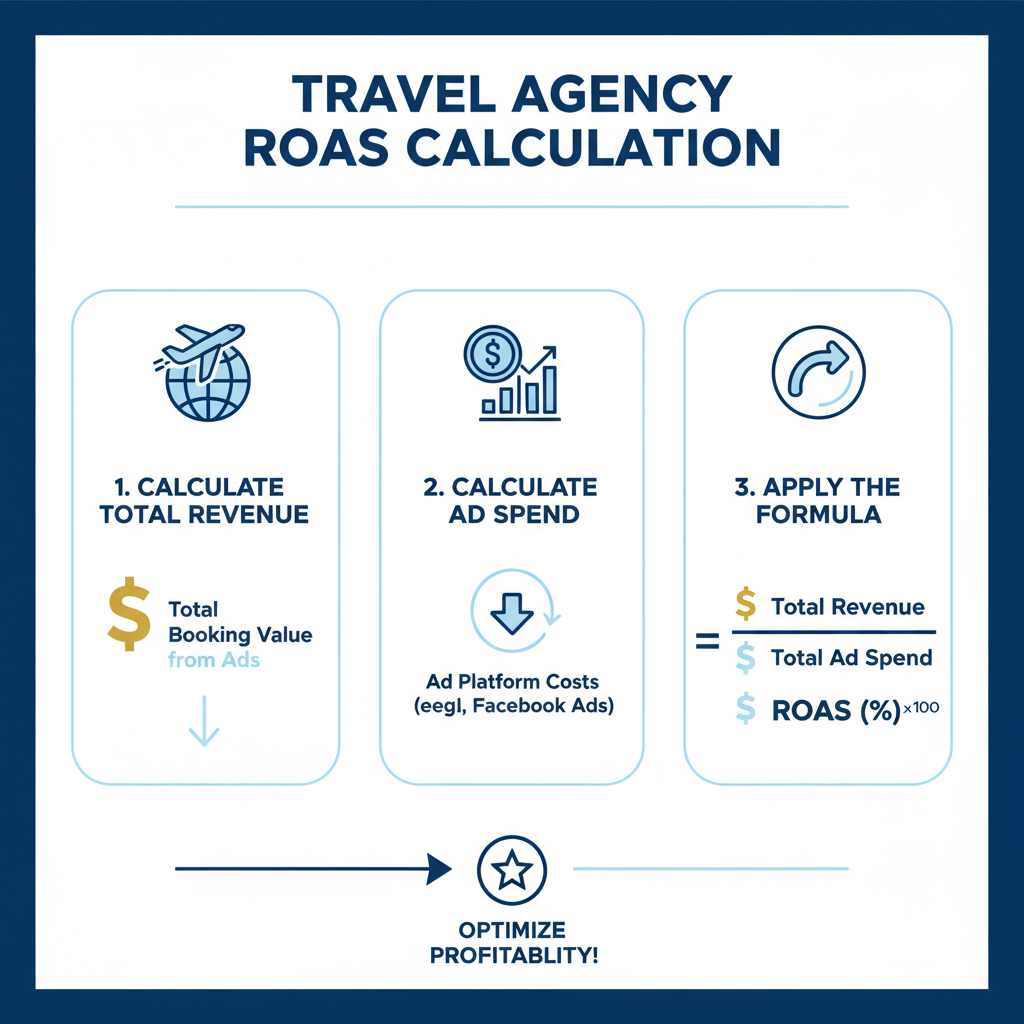
- Return on Ad Spend (ROAS): The total revenue generated for every dollar spent on ads. This is arguably the most important metric for travel agencies, as it directly reflects profitability.
- Reach: The total number of unique people who saw your ad.
- Frequency: The average number of times each person saw your ad. High frequency can lead to ad fatigue.
- Booking Value: The actual revenue generated from each booking attributed to your ads. This helps calculate precise ROAS.
Regularly reviewing these metrics allows us to identify what’s working, what’s not, and where to allocate more resources for optimal results.
Navigating Facebook’s Advertising Policies
Adhering to Facebook’s advertising policies is non-negotiable. Violations can lead to ad rejection, account suspension, and a significant disruption to your marketing efforts.
- Ad Review Process: Every ad submitted to Facebook goes through a review process to ensure it complies with their policies.
- Common Reasons for Ad Rejection: Misleading Claims: Avoid exaggerated promises or deceptive language about pricing, availability, or experiences.
- Prohibited Content: This includes discriminatory practices, illegal products/services, or content that promotes hate speech.
- Personal Attributes: Do not imply knowledge of a user’s personal attributes (e.g., “Are you looking for a romantic getaway?”). Frame it generally (e.g., “Find romantic getaways”).
- Respecting User Privacy: Be mindful of data usage and privacy. Ensure your website has a clear privacy policy and that you are compliant with all relevant data protection regulations.
- Special Ad Categories: While travel isn’t typically a “Special Ad Category” like housing or employment, it’s always good to be aware of these as they have stricter targeting rules.
Familiarize yourself with Facebook’s full advertising policies. Proactive compliance ensures your campaigns run smoothly and reach your intended audience without interruption.
Evolving Your Strategy: Trends and Tools for Digital Marketing Growth for Travel Agents
The digital landscape is constantly changing, and staying updated is key to long-term success.
- Eco-tourism Trend: Travel demand is at an all-time high, and eco-tourism is on the rise. Travelers are increasingly concerned with sustainable and ethical practices. Positioning your agency in this high-potential niche can attract a growing segment of conscious travelers.
- The Rise of Video Content: Video continues to dominate social media. Short, engaging video clips showcasing destinations, travel experiences, or behind-the-scenes glimpses of your agency can significantly boost engagement and reach.
- Using Facebook Creator Accounts for Personal Branding: For individual travel agents or boutique agencies, a Facebook Creator Account can be a powerful tool. It allows you to build a personal brand, engage with your audience through live broadcasts and stories, and even explore monetization options like Facebook Stars or paid subscriptions. This helps foster a deeper connection with your audience.
- Utilizing Facebook Shops for Travel Merchandise or Fixed Packages: Facebook Shops allows businesses to set up a customizable online storefront directly on their Facebook Page. For travel agents, this could mean selling travel-related merchandise (e.g., branded luggage tags, travel guides) or offering fixed-price travel packages directly through the platform.
- Staying Updated via Meta for Business Resources: Facebook (Meta) constantly updates its features, tools, and policies. Regularly check the Meta for Business website and subscribe to their newsletters to stay informed about the latest advertising trends and best practices relevant to the travel industry.
By embracing these evolving trends and tools, your travel agency can maintain a competitive edge and continue to grow its digital presence.
Frequently Asked Questions about Facebook Ads for Travel Agents
How much should a travel agency spend on Facebook ads?
A common starting ad spend for tour operators is between $750 and $2,000 per month, but this depends heavily on your specific goals, the competitiveness of your market, and the desired scale of your campaigns. It’s best to begin with a test budget you’re comfortable with, carefully measure the Return on Ad Spend (ROAS), and gradually scale up your investment as you observe positive results and clear profitability.
What’s more effective for travel: Video ads or Image ads?
Both video and image ads can be highly effective for travel agencies, and a successful strategy often involves a mix of both. Video ads are exceptional for immersive storytelling, showcasing the emotional experience of a destination, and can lead to higher engagement and conversion rates (as seen with Travel Department’s 27X ROAS for video). Image ads, on the other hand, are quicker to produce and can be very effective for clear, direct offers or showcasing specific deals. We recommend testing both formats to see what resonates best with your specific audience and campaign objectives.
How long does it take to see results from Facebook ads?
You can start seeing initial data, such as clicks, impressions, and basic engagement, within 24-48 hours of launching a campaign. However, generating meaningful results like qualified leads and actual bookings typically takes longer. It often requires several weeks to a few months to properly test different audiences, refine your ad creatives, build sufficient retargeting pools, and allow Facebook’s algorithms to optimize delivery. Patience, consistent monitoring, and continuous optimization are key to achieving significant and sustainable results.
Conclusion
Mastering Facebook ads is a journey, not a destination. By starting with a solid foundation of audience research and clear objectives, crafting compelling creatives, and embracing advanced strategies like retargeting and A/B testing, travel agents can transform their business. This powerful platform offers an unparalleled opportunity to connect with dreamers and planners, turning clicks into loyal clients and driving sustainable growth for years to come.